
Your radiator plays a central role in keeping your engine at a safe operating temperature, and when it starts to fail, the symptoms usually show up in a handful of predictable ways. Recognizing these signs early gives you the chance to address a radiator problem before it turns into serious engine damage, which is exactly why each of these symptoms deserves attention rather than being dismissed as a minor annoyance.
Coolant Leaks
A radiator that has developed a leak, whether from corrosion, a damaged seam, or physical impact from road debris, will typically show up as a puddle of coolant under the front of your vehicle after it has been parked for a while. Coolant is usually green, orange, pink, or blue depending on the formulation, and it has a distinctly sweet smell that helps distinguish it from motor oil or other fluids that might also leak from a vehicle. A leak from the radiator itself tends to appear as a puddle specifically near the very front of the car, since that is generally where the radiator sits.
Overheating
A radiator that cannot dissipate heat effectively, whether from internal blockage, external debris covering the fins, or a failing fan, will struggle to keep your engine at a safe temperature, particularly during stop and go traffic or Oklahoma City’s hot summer stretches when cooling demand is already at its highest. A temperature gauge that climbs higher than normal, especially one that rises specifically during slower driving when airflow across the radiator is reduced, often points directly to a radiator that is not performing as it should.
Low Coolant Levels
Coolant should not simply disappear over time under normal circumstances, so a coolant reservoir that keeps running low despite regular topping off suggests a leak somewhere in the system, and the radiator is one of the most common sources. Checking your coolant level periodically, and noting how quickly it drops if it does, gives you useful information to share with a technician when you have the radiator inspected.
Visible Radiator Damage
A quick visual check behind your front grille can reveal damage that directly explains reduced cooling performance. Bent or crushed fins, often from a minor front end impact or debris kicked up on the highway, reduce the surface area available for heat exchange. Physical dents or damage to the radiator’s tanks or core, the main body of the radiator itself, can also indicate a problem serious enough to require repair or replacement rather than a simple fix.
Corrosion
Rust colored staining, a crusty white or greenish residue, or visible corrosion on the radiator itself often indicates that coolant has been seeping out slowly and evaporating, leaving mineral deposits behind at the leak point. This kind of corrosion tends to develop gradually, meaning a radiator showing visible corrosion has likely been leaking for some time even if the leak has not yet become severe enough to produce an obvious puddle underneath the vehicle.
Unusual Smells
The sweet smell characteristic of coolant, if noticeable inside the cabin or immediately upon opening the hood, often indicates a leak that is either dripping onto a hot engine component and burning off, or one that has worked its way into the cabin ventilation system through a related component. This smell is a reliable early indicator worth investigating even before a visible puddle or an obvious temperature gauge change appears.
Temperature Gauge Problems
Beyond a gauge that simply reads high, watch for one that fluctuates unpredictably, rising and falling without a clear connection to your driving conditions, since this can indicate air trapped in the cooling system, a failing radiator cap that is not maintaining proper pressure, or uneven coolant flow caused by a partially blocked radiator. A gauge that seems to respond oddly compared to how your vehicle has behaved in the past is worth investigating even if it has not yet reached a genuinely alarming reading.
How Radiator Problems Affect The Entire Cooling System
The radiator does not work in isolation, it is one part of an interconnected system that includes the water pump, thermostat, hoses, and the engine itself. When the radiator cannot dissipate heat properly, coolant returns to the engine warmer than it should be, reducing the entire system’s ability to manage engine temperature effectively. This means a radiator problem, even one that starts small, tends to place additional strain on other cooling system components as they try to compensate, sometimes accelerating wear on parts that were otherwise in good condition.
Why Continued Driving Can Cause Engine Damage
An engine that runs consistently hotter than its designed operating temperature, even without reaching a full blown overheating emergency, experiences accelerated wear on internal components and seals. If a radiator problem progresses to the point of actual overheating, the risks become considerably more serious, including a warped cylinder head or a blown head gasket, either of which represents a dramatically more expensive repair than addressing the radiator issue that caused the overheating in the first place. If you have experienced a starting issue following an overheating event, our guide on the top 10 reasons your car won’t start and how to get back on the road covers a range of causes worth ruling out separately.
When Professional Inspection Or Repair Is Necessary
A minor coolant leak that has not caused any change in your temperature gauge is worth having inspected within the next few days rather than as an absolute emergency, though it should not be ignored indefinitely since it will likely worsen over time. Visible corrosion, bent fins, or a coolant reservoir that keeps running low despite regular topping off all warrant a professional inspection soon, since these signs suggest an active, ongoing problem rather than a one time issue.
A temperature gauge climbing toward the red zone, visible steam coming from under the hood, or a strong coolant smell combined with any performance change in the vehicle requires immediate attention rather than continued driving. Pull over safely, turn off the engine, and allow it to cool before attempting to check anything under the hood, since a hot, pressurized cooling system can cause serious burns if opened while still hot.
Why Oklahoma City’s Climate Makes This Especially Important
Oklahoma City’s hot summers, combined with the kind of severe spring weather that can bring sudden temperature swings and demanding driving conditions, mean a cooling system here has less margin for error than it would in a milder climate. A radiator issue that might be a minor inconvenience elsewhere can escalate more quickly once genuine summer heat is added to the equation, which makes prompt attention to any of the signs covered here particularly worthwhile for OKC drivers specifically.
Why A Mobile Mechanic Fits Radiator Diagnosis Well
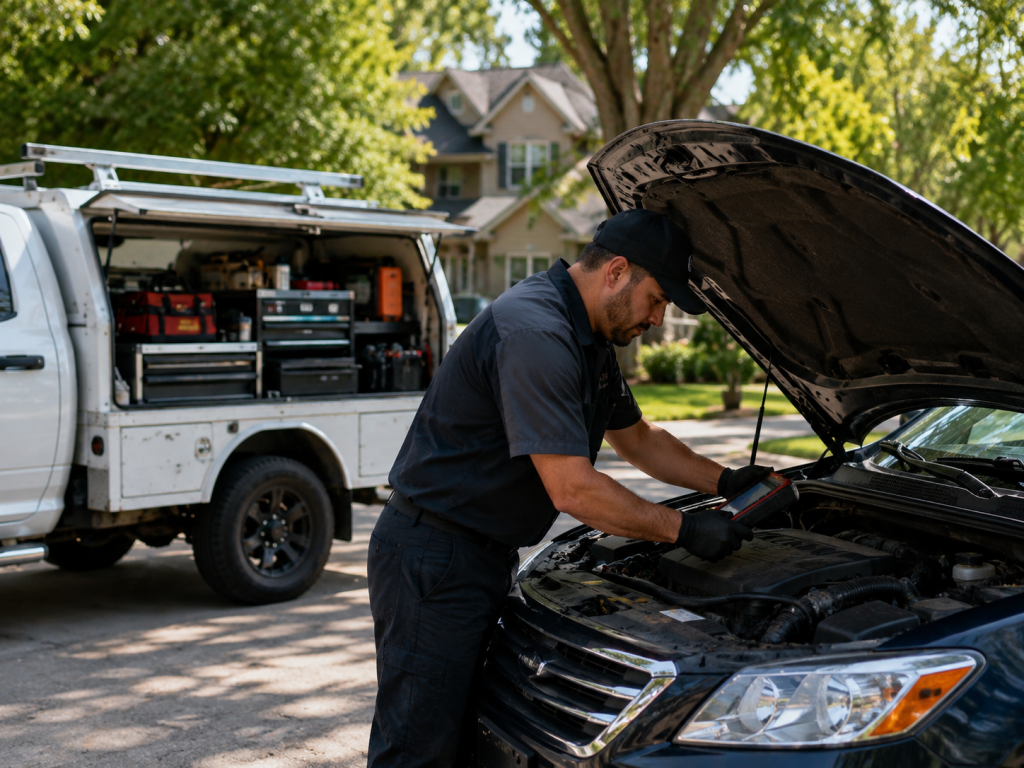
Diagnosing a radiator problem often involves a pressure test and a close visual inspection that a mobile mechanic can perform right at your home or workplace, rather than requiring you to drive a vehicle with a potentially failing cooling system across town to a shop. This is particularly valuable if you are uncertain how serious your specific symptoms are and would rather not risk a breakdown finding out.
We covered the broader advantages of this approach in our article on why mobile mechanics are better than traditional auto shops in Oklahoma City, which explains how convenience and prompt service come together, particularly useful for a radiator issue you would rather not let progress further.
Address Radiator Symptoms Before They Become An Emergency
Recognizing the signs covered here, coolant leaks, overheating, low coolant levels, visible damage, corrosion, unusual smells, and temperature gauge irregularities, gives you a real chance to address a radiator problem before it causes serious engine damage.
If you have noticed any of these symptoms, visit our homepage to learn more about our services, or reach out through our contact us page to schedule a visit at your home or office anywhere in the Oklahoma City area.
Catching a radiator problem early is one of the simplest ways to avoid a much more serious and expensive repair down the road.